My post, The Home of My Youth, prompted me to do this follow up. Just to bring a little history to those interested enough to trudge through my blog. I apologize for the length of this article but I warned you, I do tend to ramble on.
Sometimes it’s hard to know where to begin the story of one’s life. I’ve always heard though that the beginning of every journey starts with the first step. I believe it would be impossible for anyone to understand who I am without first understanding where it is that I came from. That place was a small town all but forgotten by the rest of the world, buried deep in the heart of the Missouri river valley. Nothing more than a wide spot in the barely paved state highway that slowed to 25 miles per hour as it crossed the exact center of nowhere.
There, tucked away in the north central part of the state, about ten miles or so from where the clear and slow moving water of the Grand River mixes with the quickly rolling mud of the Missouri River was my isolated valley. A tiny insignificant place dotted with small farms and rolling pastureland of bluestem, switch, and Indian grass. Somewhere just off the beaten path and a little left of “where the hell am I anyway”.
From high up in the hills where the Crabapple and Cottonwood creeks merge just outside Log Cabin Station there is a small creek that begins to snake its way south for thirty miles or so along the northern boundary of that rich Sugar Maple bottom land. On the burning days of summer the water in that creek moved slowly through a green and fertile landscape. Baked by the scorching sun, huge cracks appeared in the clay along its banks. Willow trees drooped in the heat; their limbs dipping down, longing for the refreshing touch of the cool silver water. Gars, carp, and catfish flipped the surface with their tails. Spreading small circles through the barely moving current. A few soft shelled turtles sprawled across logs and rocks basking in the afternoon sun. In most places it ran so shallow that as a small boy I could walk from one side to the other without getting the legs of my cutoff blue jeans wet.
In the springtime those soft clouds that drifted lazily across the blue sky could turn black. Heavy thunderstorms would roll over those loess covered shale and limestone mounds that rose above the valley. Rain fell in sheets across the thousands of acres of oak, walnut, hickory, maple, and cottonwood trees. The barrage would send silt filled water rushing down through hundreds of sloughs, branches, and springs. The tiny creek swelled until it could no longer contain itself and in a rage boiled over its banks. But the anger was usually short lived and the turbulent water would move on and pour its lifeblood into the central vein that fed the heartlands of this country. As it slowly receded into the confines of its tree lined banks it left behind another film of fertile topsoil.
In winter the tiny waterway would freeze and become dormant under a thick cover of ice. Its center would bow and crack from the heavy weight of snow. There it would wait patiently and gather its strength. Ready to burst forth and carry life again when the weather warmed and the clouds turned black.
For seven centuries this cycle had brought life to this valley and for seven centuries the ancestors of the Sioux Indians fished, hunted, and thrived there. They were the first to speak its name. The abundance of wildlife in the area led them to believe that small waterway was the ‘River of the Great Spirit’, and they called it…Wakenda.
It remained unchanged in appearance until those earliest settlers from Tennessee, Kentucky, and the Carolinas stretched their way westward from St. Louis on the heels of Lewis & Clark. The promise of prosperity brought them west and they brought with them their rifles and plows. With them too came the white man’s diseases and the most skillful of any assassin…progress. As progress settled into the valley of the Wakenda, the Great Sioux of the area had no choice but to fade away.
The men who settled the Wakenda valley had no interest in ripping down the forest and building an empire from the timber. They had no desire to slaughter every animal in sight to get rich from the fur trade. They planted their crops in the rich black gumbo and built their houses from the thick stands of hardwood. They made homes and carved out farms. They brought to life their dreams and created a legacy that would last for generations. They were hard working men and women, with solid moral character, integrity, and honesty. Like the people you’ll find in those pictures stored away in your attic or in an old family bible. Those faded black and white photos of people standing stiff in their threadbare dress clothes. With their well-worn hats shading their dark sullen stares. Their blank expressions and the heavy lines that crease their leathery skin makes your heart bleed to see that their youthfulness had been sucked from them at such an early age. You can see the years of hardship that had been ground into their tight-lipped unsmiling faces. But deep within those dark unblinking eyes you can see the sparkle of their resolve and you know that they would never give up; no one could ever beat them back and nothing could ever stop them.
*****
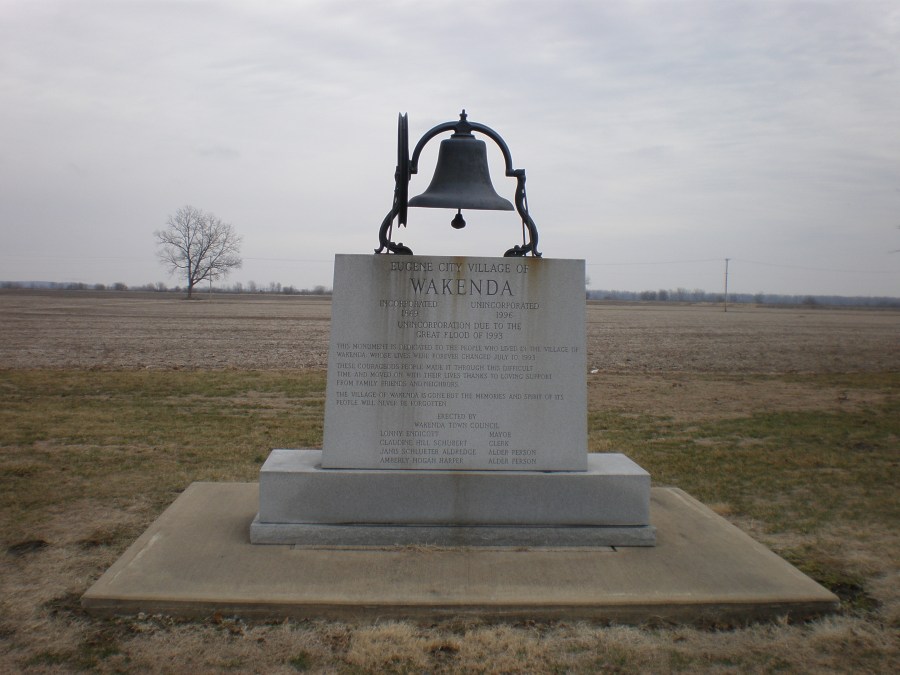
It wasn’t long after the arrival of those first settlers before progress came again. The cold steel rails of the North Missouri Railroad Company rolled across the valley carrying shop keepers, blacksmiths, and carpenters to build churches and schools. In 1869 a small settlement sprang up from the prairie grass and as it grew to become a town, it would eventually take on that same name as the creek and the valley itself. Wakenda, Missouri, ‘Home of the Great Spirit’ would thrive for a while. But eventually, like the Sioux before it, it too would be forced to succumb to the progress of time. It would struggle to survive and finally die a whimpering death.
Wakenda would be reclaimed by that same raging water that had sustained life for so many years and slowly fade away until nothing more than a pile of stones are left to mark its existence.
 Jerry Brotherton