That Red-Haired Girl

Every person’s destiny is created by a single point in time and we are forever tied to that event. That moment when the world starts to make sense and the pages in the book of our life, unfolds to reveal a glimpse of what will become our destiny.  Every decision we make and every action we take for the rest of our lives, will always bring us back to that exact moment. For me, October 7th, 1972 at 8:16AM was that moment.

You walked directly toward me, emerging from the early morning fog like a mystical goddess passing through the veil between heaven and earth. As I watched you float down the gravel road my heart tried desperately to escape my chest and join you; longing to intertwine with your soul. Blood rushed through my body until my head became light and my vision began to fade. I had to look away or fall to the ground.

It was that instance that marked the beginning of the end of my innocents. I knew in that moment, I would have to forfeit my youthful ways and learn to deal with the raging hormones of puberty. I understood that time and nature would force me to relinquish my body to the sometimes exciting, but usually frightening, world of a teenager. Although at the time I could not tell you so… I knew that moment marked the beginning of the rest of my life. Oh how I have love that life.

My Valley

My post, The Home of My Youth, prompted me to do this follow up. Just to bring a little history to those interested enough to trudge through my blog. I apologize for the length of this article but I warned you, I do tend to ramble on.

Sometimes it’s hard to know where to begin the story of one’s life. I’ve always heard though that the beginning of every journey starts with the first step.  I believe it would be impossible for anyone to understand who I am without first understanding where it is that I came from.  That place was a small town all but forgotten by the rest of the world, buried deep in the heart of the Missouri river valley. Nothing more than a wide spot in the barely paved state highway that slowed to 25 miles per hour as it crossed the exact center of nowhere.

There, tucked away in the north central part of the state, about ten miles or so from where the clear and slow moving water of the Grand River mixes with the quickly rolling mud of the Missouri River was my isolated valley. A tiny insignificant place dotted with small farms and rolling pastureland of bluestem, switch, and Indian grass. Somewhere just off the beaten path and a little left of “where the hell am I anyway”.

From high up in the hills where the Crabapple and Cottonwood creeks merge just outside Log Cabin Station there is a small creek that begins to snake its way south for thirty miles or so along the northern boundary of that rich Sugar Maple bottom land. On the burning days of summer the water in that creek moved slowly through a green and fertile landscape. Baked by the scorching sun, huge cracks appeared in the clay along its banks. Willow trees drooped in the heat; their limbs dipping down, longing for the refreshing touch of the cool silver water. Gars, carp, and catfish flipped the surface with their tails. Spreading small circles through the barely moving current. A few soft shelled turtles sprawled across logs and rocks basking in the afternoon sun. In most places it ran so shallow that as a small boy I could walk from one side to the other without getting the legs of my cutoff blue jeans wet.

In the springtime those soft clouds that drifted lazily across the blue sky could turn black. Heavy thunderstorms would roll over those loess covered shale and limestone mounds that rose above the valley. Rain fell in sheets across the thousands of acres of oak, walnut, hickory, maple, and cottonwood trees. The barrage would send silt filled water rushing down through hundreds of sloughs, branches, and springs. The tiny creek swelled until it could no longer contain itself and in a rage boiled over its banks. But the anger was usually short lived and the turbulent water would move on and pour its lifeblood into the central vein that fed the heartlands of this country. As it slowly receded into the confines of its tree lined banks it left behind another film of fertile topsoil.

In winter the tiny waterway would freeze and become dormant under a thick cover of ice. Its center would bow and crack from the heavy weight of snow. There it would wait patiently and gather its strength. Ready to burst forth and carry life again when the weather warmed and the clouds turned black.

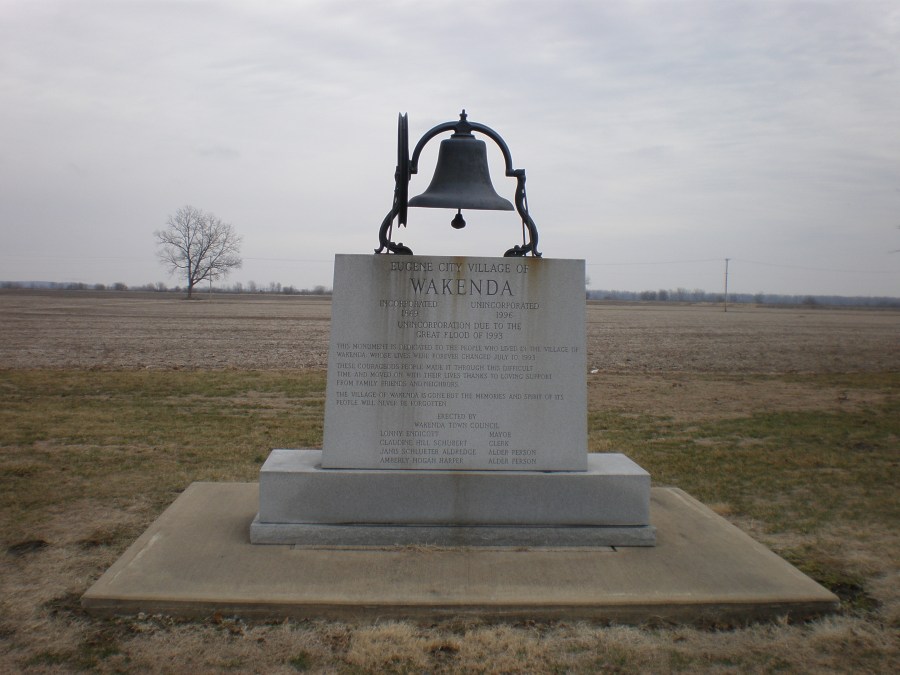
For seven centuries this cycle had brought life to this valley and for seven centuries the ancestors of the Sioux Indians fished, hunted, and thrived there. They were the first to speak its name. The abundance of wildlife in the area led them to believe that small waterway was the ‘River of the Great Spirit’, and they called it…Wakenda.

It remained unchanged in appearance until those earliest settlers from Tennessee, Kentucky, and the Carolinas stretched their way westward from St. Louis on the heels of Lewis & Clark. The promise of prosperity brought them west and they brought with them their rifles and plows. With them too came the white man’s diseases and the most skillful of any assassin…progress. As progress settled into the valley of the Wakenda, the Great Sioux of the area had no choice but to fade away.

The men who settled the Wakenda valley had no interest in ripping down the forest and building an empire from the timber. They had no desire to slaughter every animal in sight to get rich from the fur trade. They planted their crops in the rich black gumbo and built their houses from the thick stands of hardwood. They made homes and carved out farms. They brought to life their dreams and created a legacy that would last for generations. They were hard working men and women, with solid moral character, integrity, and honesty. Like the people you’ll find in those pictures stored away in your attic or in an old family bible. Those faded black and white photos of people standing stiff in their threadbare dress clothes. With their well-worn hats shading their dark sullen stares. Their blank expressions and the heavy lines that crease their leathery skin makes your heart bleed to see that their youthfulness had been sucked from them at such an early age. You can see the years of hardship that had been ground into their tight-lipped unsmiling faces. But deep within those dark unblinking eyes you can see the sparkle of their resolve and you know that they would never give up; no one could ever beat them back and nothing could ever stop them.

*****

It wasn’t long after the arrival of those first settlers before progress came again. The cold steel rails of the North Missouri Railroad Company rolled across the valley carrying shop keepers, blacksmiths, and carpenters to build churches and schools. In 1869 a small settlement sprang up from the prairie grass and as it grew to become a town, it would eventually take on that same name as the creek and the valley itself. Wakenda, Missouri, ‘Home of the Great Spirit’ would thrive for a while. But eventually, like the Sioux before it, it too would be forced to succumb to the progress of time. It would struggle to survive and finally die a whimpering death.

Wakenda would be reclaimed by that same raging water that had sustained life for so many years and slowly fade away until nothing more than a pile of stones are left to mark its existence.
Fathers Day Introspect

With the rusting of time, our memories can turn ordinary actions into heroic deeds; heroes become legend and eventually, a myth is born.

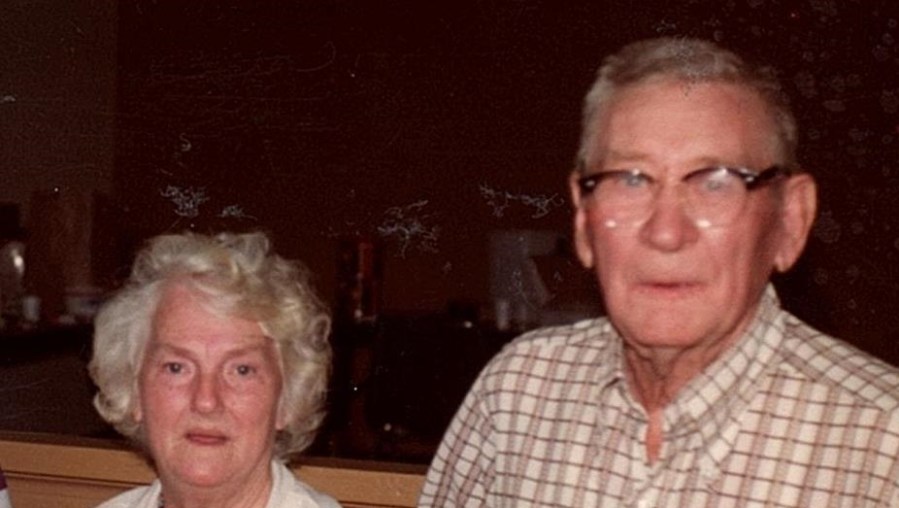
My father had lived for 92 years and for more than fifty of them I had called him my friend. I’d heard him say many times how he’d grown up in a simpler and certainly less complicated era. I know that the problems I’ve faced in my lifetime are nothing more than a mere drop in the bucket of what his eyes had witnessed. He’d lived through two world wars not to mention a few others that most people would just as soon forget. He saw first-hand, the ‘great depression’, and too many so called recessions. He’d witnessed oppressions and knew the amount of cruelty that men were capable of inflicting on their neighbors.

He’d faithfully followed the rule of 15 presidents (more faithfully to the Republicans than those airheaded Democrats) as they each gave him a promise of prosperity. Though one way or another that prosperity somehow had always managed to evade him. He never gave up hope for his family, himself, or humanity. He’d raised fifteen children to maturity and had been a devoted husband for over seventy years. He’d witnessed over a hundred births into his extended family and sorrowed over an untold number of deaths, including his wife and three of his own children.

Now don’t get me wrong. I know he wasn’t a spectacular man. At least not in a superhero kind of way. He didn’t discover the cure for the common cold, win a Nobel Prize, or anything like that. He wasn’t famous, he definitely wasn’t a Saint, and it doesn’t take a person with too many brains to figure out that he wasn’t a rich man either. In fact he’d spent his entire life fighting the struggle against poverty until the day he died.

He was however an honest and hard-working man. He was a good friend, a good neighbor, and a person that people could count on when things got a little rough. He’d give you all he had and never expect a thing in return…except friendship. I suppose though when you really think about it, what other definition of a superhero is there.

So it was at his funeral that I suddenly came to the startling realization; that for me the road that I’ve already traveled is a much further distance than what is left of my journey not yet taken. My aches and pains constantly remind me of my age and of my ultimate mortality. My body has become a symphony of creaks and groans and it seems that everything about me only functions with the help of some sort of device. Glasses, hearing aids, pills to control blood sugar, blood pressure, high cholesterol and Viag… well by now, I’m sure you get the picture.

After his funeral, back in my comfortable house surrounded by my familiar things, my granddaughter crawled onto my lap. She looked up at me with those big brown eyes filled with the innocence of youth and asked,

“Papa, did you know that man they were talking about this morning?”

“Yes I did sweetie. That was my father, your great grandfather.”

“What was he like,” she asked, “I don’t think I remember him.”

I was certainly shocked. I couldn’t believe what I’d just heard. It was as if those words jumped up and kicked me right between my eyes. As I searched my mind for some answers, I began to understand that old saying, ‘we only live as long as someone remembers us’. I quickly realized that if my father, a truly great individual, could fade from memory after only one single generation… I sure as hell don’t stand much of a chance.

So here’s to you dad.  I know that if there is a Heaven, yours will be laying on the side of a tree covered hill looking out over an open meadow. You will be watching the moon cross an unclouded sky and listening to the sound of your dogs singing their music. So pass around the jug to all our friends that have joined you on this Father’s Day and know that you are in our memories and our hearts.

The Before and After

When I was a much younger version of myself, there was an order to my existence. Life and death made sense to me because science told me the truth about the universe. The one thing I thought I knew was that energy could not be created or destroyed. So the concept of Heaven and Hell were just mythical constructs created by man to rationalize death.

We simply choose to place our loved ones in the Here-After to create the illusion that we might one day see them again. It eased the sorrow we felt at their passing. I understood that and I accepted death as a simple transference of energy from one thing to another.

Death made sense to me because ‘age’ dictated that people had outlived their life span. After all, our bodies are frail things and can only sustain life for a finite amount of time.

Besides, I was young and healthy. Any thoughts of the end were far from my mind. Maybe I would live forever or at least technology would develop to a point where our lifespans would make it seem like forever.

Oh yes, I was happy with my beliefs.

But that was when I was young.

The voices of destiny have started to whisper their harsh words of mortality into my ears. It’s no secret that I am the next to youngest of fifteen children. Now whatever your thoughts on that might be; we can discuss on some future blog. The reason I mention it here is because, much too quickly, my huge family has dwindled from fifteen children to seven.

And now, my body is moving further down that corridor of existence, and I can feel it beginning to break apart. Age is forcing my beliefs to crumble and I find myself spending more and more time (probably too much time) thinking about what the future holds for me.

So, I need to believe that I’ve been wrong all these years. I’m hoping that there’s something more than just the now and that there is some place set aside for me in the after.

The Voices in My Head

I was sitting at my computer, as I usually am in the dying hours of each day. I had my headphones on and was engulfed in the music from my favorite play list. Letting the rhythms pass through me like a gentle brook, hypnotizing and relaxing. But somewhere in the middle of Kenny Chesney’s ‘Chasing Demons’ a frail and timid sound tried to push through the notes. It was barely audible in the beginning; as if someone from a distant neighborhood was calling out for their loved ones to come in for the night. I ignored it and continued with my nightly ritual. But the noise sulked and brooded; reminding me of a spoiled child that had been forced to stand in the corner. It fidgeted and twitched; stomping around in my mind, becoming louder, demanding to be noticed. As it became clear that I was not to be rid of it I picked up my pen and let the noise pour into it.

At first it rambled too quickly. Its sentences were incoherent and confused and its structure was laughable. But as the noise learned to control its emotions it calmed and gained confidence. A coherent word here and an intelligent sentence there until it became its own voice bordering somewhere on the edge of competent prose. Through my pen the noise began to court the page, stroking its ego with eloquence and coaxing the words from the depth of the paper’s blank stare. It no longer needed me for guidance and I let the ink caress the emptiness between the blue lines. I lost track of the music. There was only the sound of the pen carrying on its seductive conversations. I sat helplessly by and let the noise sing its song. It became so engrossed with itself that it did not feel the need to confide in me as it rolled the words from nothingness and brought them into creation.