Poor Vs. Poverty

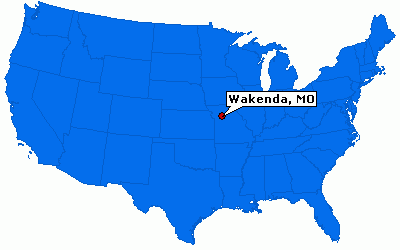
It’s true, while growing up in my tiny little town of Wakenda Missouri, we didn’t have much. But, one thing is for certain…that no matter how far down the financial ladder you might find yourself you can always look around and see someone that’s just a little worse off than you are. Somebody you can point to and say, “At least I’m not like those poor unfortunate bastards.” There’s always going to be a gap to separate, ‘those poor’ people, and ‘us’, and it doesn’t matter how low on the totem pole ‘us’ happens to be.

What I can tell you about poverty is that it is something that you can’t understand by reading about it in some book. It means different things to different people. It’s personal, and it will affect everyone in a completely different way. You can’t know how you’ll handle it unless you’ve lived through it. We can sit here and talk about it all day and I can tell you about how poverty means letting your child lay in bed with a fever so high that you fear death might not be too far off. Yet, still not be able to get the medicine they need, outside those home remedies passed down from generation to generation. I can tell you tales, of how a 14-year-old boy leaves his home, family, and friends to try to find a better life somewhere else, because he believes there’s nothing for him if he remains. His realization that anything that could possibly happen to him somewhere else, good or bad, would still have to be better than his life fading into oblivion. I could try to explain to you that real poverty is feeding your children sugar sandwiches because there is no other food in the house. Real poverty means knowing that when you can afford them; beans, fried potatoes, and white gravy will go a long way to silence the cries of empty stomachs.

I can tell you these things and you will nod your head in agreement and maybe even say that you understand where I am coming from…but unless you have been there you probably have no idea what I am talking about.

So perhaps it’s time that I set the record straight and let you know just how poor my family really was.

“Man we were so poor… Lordy, Lordy… everyone should feel sorry for poor ole me.”

I had to do the chores for every house in town before I could go to bed at 3:00 in the morning. Then get up at 5 AM, walk twenty miles uphill to school and then another twenty miles uphill to get home at night…in four feet of snow…all year long…and barefoot. My parents forced me to wear flour sacks for clothes, eat worms for breakfast, and dirt for supper. I had to endure the humility of playing with second hand (or maybe third or fourth hand) toys. That is, of course, if I had any real toys at all and not just a stick and a dead frog named Pete. If you buy that then I have a bridge in Brooklyn I’d like to sell you.

I know that nobody (if they are in their right mind that is) would ever admit to being poor. I guess we all believe that without the proper portfolio the poor will never cross into heaven. Like there’s some kind of doorman standing there at the gates taking cash bribes and sending straight to hell all those who can’t afford to pay.

Well I’ve never been accused of being the smartest person in the world so I’m not afraid to tell you that growing up in the small village of Wakenda we were poor, needy, poverty-stricken, destitute, lacking the means to obtain the comforts of life. In other words, we were those poor unfortunate bastards. My parents didn’t try to hide it. They never bowed their heads to anyone. That was my family, take us or leave us. The thing is that no matter how hard people would try to convince you otherwise nearly everyone in town was in the same boat. Of course there were those few that had a little more and usually when they wanted to impress their neighbors referred to us as ‘less fortunate’.

Come on now, let’s be honest and call a turd a turd when it smells like shit. We weren’t ‘less fortunate’, ‘economically deprived’, ‘underprivileged’, or ‘financially challenged’…we were poor…dirt poor…and I don’t see any shame in admitting that. As my father always said, “we didn’t even have a decent pot to piss in.”

As a child I often wondered why he would even consider using a pot when we had a perfectly good outhouse in the back yard. I suppose though a more compelling issue should have been the fact that my mother seemingly unconcerned that my father would use her cooking utensils for bathroom accessories, would always reply, “but what we never had, we never missed.” I understand what she was saying; that the important things in life come from the heart and mind and not from your pocketbook. Seriously though, here’s where I have to say “donkey-crapola on a stick.”

I can definitely tell you that when one of the other kids got something new…or even second hand for that matter, which to me was as good as new. I missed not getting it too. I missed it a lot. But did it kill me…NO. Did it make me stronger as a person…I believe so.

So what is the difference between poverty and being poor? Despair! Despair tells you that there is no hope of a change for the better. When you truly believe that there is no hope of change it sets its own limits to your dreams. That is the key. When you truly believe there is no hope of change.

My mother and father did the best with what they had. They never gave up hope. Here I am today to tell you that there is always hope. My parents knew it and made sure their kids understood that no matter how bad things are at the time there is always a way. Mom made everything she could from scratch. We raised chickens, canned our own fruits and vegetables, and my brothers, my father and I hunted for every imaginable creature that could walk, crawl, fly, swim, had fur, feathers or scales. As long as it had meat on its bones or fur we could sell, it was fair game.

Now I can’t say that I lived in total innocents or was completely unaware of what I have been told was my poor and wretched existence. I knew that we didn’t have much. I just truly never paid attention to it. Besides, there were things that I was able to take for granted. I knew that if I was hungry there was always just enough to eat. If I was thirsty there was always just enough to drink. If I was hurt there would be enough love and compassion and my mother would be there with a hug and a kiss. If I began to feel sorry for myself my father would be there with a swift kick in the ass to set me back on the right path.

Besides, the lack of tangent possessions only served as fodder to fuel my imagination. It’s what allowed me the ability to make a rifle from a stick, a hand grenade from a dirt clod or a spear from a dried weed. If there were things that I really couldn’t live without I would just walk along the roadside and pick up discarded soda pop or beer bottles, and return them for deposit. (That is until that nameless evil beer company from St. Louis stopped using long necked bottles and began using those short necked things that had no refund. That my friends was indeed a sad day for kids all over America.) Of course you’re assuming that in a village with a population of only 150, including dogs, cats, cows, pigs and chickens, there was anywhere to spend money anyway.

Of course, the bad thing about growing up poor was the side effects. They probably did ruin me for life….by teaching me not only good work ethic but also a healthy understanding of the value of money and a solid respect for sharing.

You know there is an old saying that the rich get everything they want so they don’t feel strongly about anything they have. In their eyes everything is replaceable. I don’t know anything about that, having never been on the rich side of town. That’s why the poor hang on so tightly when something does come along though. Because we had so little we knew how to squeeze a penny until ‘Ole Abe’ had tears running down his face.
Depression

The loss of a loved one can have a profound effect on all of us. Perhaps in ways that we can’t fully realize. At first it might be hard for us to accept the reality that the person is gone. That we will never again be able to hug them, laugh with them about the good ole days, or watch the love they have for their spouses, their children or grandchildren sparkle in their eyes as they spoke of them.

After realizing that they will no longer be one of the constants in our lives we might become angry. Mad at ourselves for not spending more time with them, especially in those final years. We will pray, we will cry, but eventually we will begin to accept death as the inevitable end to every life no matter how special or unique the person was to us.

Death is a certainty for everyone and everything. It’s important however to remember that although grieving is a normal process after a loved one’s death, those that have moved on ahead of us would wish that our sorrow be short lived. Their desire would be for us to live out our lives as planned. We must continue on as examples of the positive things that they left behind, and become who we were meant to become. We must embrace our grief in order to overcome it. Remember that grief for a loved one’s death is not a sign of weakness but a sign of the love that we hold for them.

Different people react to things in different ways. It takes some a bit longer than others to get over their grief so don’t feel inadequate or unstable if it takes you a while longer than others think it should. Though we may never understand exactly why things happen; we realize that they all happen for a specific reason. It may not seem like it now, but as time moves on, we know that the pain and hurt that we feel will subside. However, the memories of all the good things they meant to us will remain.

With the holiday season upon us and our emotions already stretched to their limits, I would like to remind everyone that sometimes the events that seem small to us may be just enough to push others beyond the breaking point. Although grief is something that we must embrace in order to move on, it’s only a short step from natural sorrow to depression. I thought it appropriate to share this list, of some of the signs of depression, so that we may be better prepared to help our loved ones, or ourselves, through what can be such an emotional time in our lives.

  • Feeling physically drained or emotionally out of control (extreme mood swings, feeling good one minute and sad the next)
  • Difficulty in eating, perhaps the thought of food might even make you ill
  • Increased susceptibility to illnesses
  • Feeling emotionally shut down
  • Difficulty in doing everyday tasks, can’t think clearly, or remember things
  • Crying continuously, or unable to control anger
  • Can’t cry at all
  • Drinking more than usual
  • Can’t sleep at night, taking frequent naps, or are constantly tired
  • Sigh a lot
  • Talk about death over and over or dwell on it every moment
  • Loss of interest in work, house, or physical appearance. Neglect of personal hygiene (don’t brush teeth, take regular baths, or wash hair very often)
  • Suffer from extreme loneliness
  • Have lots of guilt about things you did or didn’t do
  • Lack of interest in sex
  • Constantly criticizing yourself
  • Feels like there is a huge hole in your heart or something is missing
  • Relive and rehash scenes or conversations
  • See no reason to exist

Perhaps, it’s the last listed here, that we must be especially vigilant. Depression can sneak up on us without warning and sometimes, it can be very difficult to distinguish between it and normal adolescent behavior. We must remember, that no matter how bad it gets, no matter now desolate, lonely, sad, miserable, or lost we feel, it will get better. Every person who is born has a purpose. We may think that our life is worthless or we won’t be missed, but we’ll never know whose life we will touch, or the difference we might make in that person’s life. However, each of us will make a difference to someone.

You can see how easily it can be to confuse depression with so many things. The key is the length of time it takes to recover from an emotional trauma. If you feel that your grieving is lasting too long, seek the help of a therapist, minister, friend, or physician. It’s okay to seek help until you are better able to handle your grief. Never be ashamed at seeking professional help. Remember that each time you suffer a loss, large or small; it can trigger feelings that will bring back all the memories of all your other losses. Things like the loss of a pet, a house fire or even a bad grade on a homework assignment is enough to push us over the edge. You may not consciously think about them, but the feelings can still be there.

Ecclesiastes 3:1-8 tells us ‘To everything there is a season, a time for every purpose under the heaven: A time to be born, and a time to die; A time to plant, and a time to pluck up that which is planted; A time to kill, and a time to heal; A time to break down, and a time to build up; A time to weep, and a time to laugh; A time to morn and a time to dance. A time to cast away stones, and a time to gather stones together; A time to embrace, and a time to refrain from embracing; A time to get, and a time to lose; A time to keep, and a time to cast away; A time to rend, and a time to sew; A time to keep silent, and a time to speak; A time to love and a time to hate; a time of war and a time of peace.’

Above all, I wish for every one of you a time of peace.

Merry Christmas to all.


Dear Son; Don’t Panic

I know how frustrating life can be at times. The world is all too quickly closing in on you and the doorway back to your sanity is getting farther and farther away. Growing smaller until it appears you’ll never fit back through it. The weight on your shoulders is so heavy it’s grinding you to the ground. It’s like you’re constantly swimming against the waves and every time you get near the surface you get dragged under by the current again and again and again… a seemingly never ending cycle.

Trust me; I’ve been on that treadmill where it seemed you’re always chasing the elusive breakeven point. No matter how hard you work it never seems to get any closer.

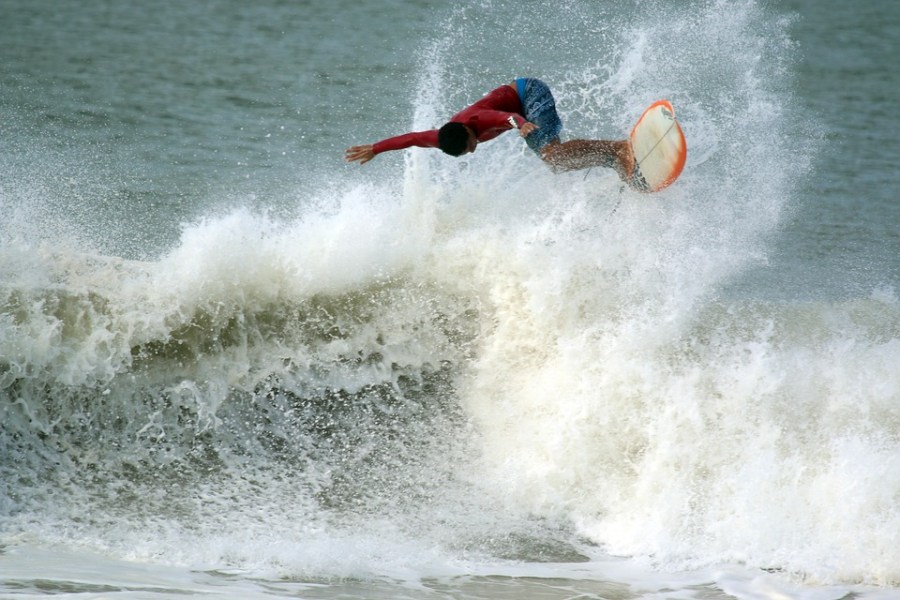
Then one day an old surfer friend of mine taught me a valuable lesson. He told me, “When the big wave hits and pulls you down don’t struggle against it. Just relax and let the buoyancy float you back to the surface.”

Isn’t that how life works? When the big waves come crashing down drowning you in the oceans of despair and pulling you farther into the icy depths of depression, sometimes you just have to stop struggling and relax. Stop panicking, take a deep breath, and slowly dissect your situation into those things that can be controlled and those that can’t. Then concentrate all your efforts on those things that you can change.

Figure out what it is that you NEED. Not what you WANT. Not what it would be NICE TO HAVE, but what you REALLY NEED. Then decide the best way to handle them and move on. If it’s something you don’t need, get rid of it.

In hopes that you can forgo the harsh realities I had to learn from firsthand experience, I would like to share with you a few lessons I’ve stubbornly learned throughout the years.

First, you must understand that the world is not fair. You’re not owed anything. No fairy godmother will appear and wave her wand to turn your pumpkin into a coach. Hard work done smartly is still the only key to success. Besides, a pumpkin will go a long way to fill empty stomachs. Better than any coach ever would.

There are many people who are more than willing to help if you just ask. No one in this world can succeed without help from someone and there is no shame in asking. But remember, just as there are times in your life you have to say NO, it is also ok for other people to say NO to you. That’s alright; everything is not always about you.

Secondly, you are not perfect. No one on this earth is. Accept other people’s imperfection and they will accept yours. There are always going to be certain people that will not love or appreciate you no matter what you do. Everyone is entitled to their opinion and it makes no difference if you agree with it or not, respect it. Don’t try to change them and don’t try to change yourself for them. Just let them go. On the other hand, there are those that will always love and appreciate you no matter what you do. Surround yourself with them. Reflect their love and appreciation back to them. They are all you need. Embrace them. A sincere smile is always worth more than words.

Your life belongs to you. You’re responsible for it. Stop blaming everyone else for your problems. Others can help guide you but never do anything that you don’t think is right just because someone else thinks it might be right for you. They won’t have to live with the results, you will. Always remember, there is nothing more important than honesty, integrity, values, love and forgiveness. These are not just words; they are a way of life.

Sometimes people will say things they don’t mean and other times they will do things they said they wouldn’t. Accidents happen and bad things can happen to good people. You are not God; you do not have all the answers. Get over it. Anger and resentment can build a very strong fort around your heart. Only forgiveness and kindness will tear it down. Admit it when you’re wrong and learn from those mistakes.

Life is not always about work. Just like you need sleep to refresh your mind and body, you need relaxation to refuel your spirit. Be thankful and take comfort in the simple things. Remember, no matter how horrible your life is or at least how horrible you think it is there are millions of people that would gladly trade places with you.

Finally, things are never as bad in reality as your imagination can make you believe. If you keep your head and don’t panic, you will eventually float to the top.

The evolution of a story!

A while back, I was asked by some friends how I came up with the stories I tell. So I thought I would put this out in cyberspace to let anyone, who might be interested, into my mind for a little visit. This is my seat of the pants process. It works for me. I’m curious to know how do other writers come up with their ideas?

First, I start off with an object.

A table

I just keep asking myself, Who, What, When, Where, and Why and keep expanding.

*There was a table in the corner

*There was a table in the corner with red Formica top and chrome edges.

*The bright afternoon sunlight slanted in through the dirt streaked window. It reflected off the red Formica and exposed the scratches and dents left by thousands of customers in the ancient table in the corner.

*The bright afternoon sunlight slanted in through the dirt streaked window. It reflected off the red Formica and exposed the scratches and dents left by thousands of customers in the ancient table in the corner. One mark, right on the edge closest to the window drew Jerry’s attention. It was a heart with the words Jerry + Deb inside it.

*The bright afternoon sunlight slanted in through the dirt streaked window. It reflected off the red Formica and exposed the scratches and dents left by thousands of customers in the ancient table in the corner. One mark, near the edge closest to the window drew Jerry’s attention. It was a heart with the words Jerry + Deb inside it. Jerry chuckled and a smile creased his face. He remembered the night that Deb scratched that into the table. Everyone called her Debbie goody-two-shoes because she was always so prim and proper. Jerry was probably the only person on earth that really knew her.

So there are many places you can take the story from here. Perhaps I will go this way.

So it was no surprise to him when Sheriff Johnson announced that Debbie had embezzled money from her bank and fled to Mexico. This too made Jerry smile. He looked at his phone again. The text read “Please call me. I am in trouble and need your help…Deb”

Or maybe this way,

It had ripped the heart from Jerry’s chest when Sheriff Johnson knocked on the door that evening twenty years ago. Those words still echo in his mind. “I’m sorry Jerry. On her way home from work, Deb was hit by a drunk driver. She was killed instantly.” Tears rolled down Jerry’s cheek.

Or,

Memories of the past twenty years flooded his mind. It had certainly been a roller coaster ride of emotions for him. Jerry was still lost in his thoughts when the little bell above the door dinged. It startled him back to reality and he looked up at the door to see Deb walk in. She was as beautiful now as she was the day she scratched their names into this table. His heart skipped a few beats as he watched her walk toward him.

“Happy Anniversary!” she whispered as she kissed his cheek.

A wide smile broke across Jerry’s face.

The Town of My Youth

Wakenda, My Kind-a Town

Wakenda wasn’t much of a town. It was officially classified as a village but it was little more than a collection of buildings. In its heyday, we had about 50 houses, a grocery store, Don’s garage, one café, three churches, two grain elevators, the railroad tracks and a population of 150 if you counted the dogs and cats.

We didn’t have a building taller than two stories unless you counted the steeple on the Church. I know that there are towns in this world that have a fancy little hut on every corner where you can get the best mocha-choca-lotta-whata coffee that ten dollars can buy. Other towns have canyons of giant skyscrapers so tall the sunshine never touches the faces of the people on its crowded streets. There are Space Needles, Gateway Arches, buildings that look like castles or pyramids. Some places might have serene lakeside views, warm seaside beaches, or panoramic mountain vistas. You can have all of these things in your town though and it will only succeed in making it…a bigger town. Wakenda had none of these and yet, I now realize, it had so much more.

Because it’s not always about how tall the buildings are, how perfect the climate is, or even how many stores you have where you can get the best in all the latest doo-dads. After all, the buildings and streets are only the bones that make the skeleton of a place. The heart and soul comes from the people who live there. Only they can create the magic that can take a town and transform it into something that you will forever call ‘Home’.

     For me Wakenda was that kind of place. It has always been and will always be ‘My Home’. I belonged to her and she belonged to me. I knew her streets. I knew her people. I knew every path, every field, and every bend in the tiny creek that surrounded her. I knew every heartbeat, every smell, every sound, and every breath of that place.

I’ve lived in many other houses in many other cities since those days of my youth. In cities where people believed that home is just a large house with a well-manicured yard. They live in a self-made solitary confinement behind tall fences that prevented them from getting to know anyone. They called themselves neighbors but they had no idea how to be neighborly. Wakenda taught me the meaning of home and it is much more than possessions and the appearance of wealth. You can only learn its true meaning by living in a place and not just surviving in it.

Yes, it was the people of Wakenda, all 150 of them that made it my home. You might have called us rednecks, hicks, bumpkins, hillbillies, clod hoppers, country boys, goat ropers, shit kickers, hayseeds, yokels, or good ole boys. Hell, we didn’t much care one way or the other. We were, brothers, sisters, children, grandchildren, lovers, husbands, mothers, fathers, neighbors… we were friends.

It’s true that my town didn’t have much to offer compared to those larger cities. There wasn’t a Mart…‘Wal’ or ‘K’ or any other letter of the alphabet. The one grocery store in town carried the necessities and if they didn’t have what you wanted, you probably really didn’t need it anyway. Whatever it was, if you just couldn’t get by without it or couldn’t make it by hand, would just have to wait for the monthly trip to the A & P in Carrollton.

We didn’t have a little hut for fancy coffee. The people of Wakenda didn’t drink fancy coffee, we drank Folgers. Fancy to my parents was cream and sugar. There were no cute little restaurants that served a little dab of ketchup on a sprig of alfalfa, called it fine dining, and charged a year’s salary for it. Hell, the closest you were ever going to get to fine dining was at the café when the waitress would ask “how’s the food” and someone would reply “just fine.”

There weren’t any gyms, saunas, spas or a public swimming pool. Fast food consisted of a bag of potato chips, a soda, or a candy bar. But who needs fast.

Wakenda had many things though that couldn’t be measured in dollars. It had silent streets lined with ancient oak and maple trees that towered high into a clear blue sky. There were bright sunny days of hunting or fishing with the people I called my friend since I was old enough to walk. I had snow filled winters of ice-skating, snowball fights, and holidays. I could stand on the bank of the frozen creek, on a deep winter’s day, with wild geese flying overhead, a clean white shroud of unbroken snow at my feet and the smell of wood smoke drifting gently on the silent breeze. The solitude shattered only by an occasional howl from a hunter’s dog in the woods across the creek, or the lonely caw of a flock of crows scratching for food in a harvested cornfield.

I could climb to the top of the hills that overlooked the town on a crisp autumn day and watch the sunrise turn the valley floor below me into a painter’s pallet of rich brown oaks, yellow birches and poplars, orange maples and sumacs, red dogwoods, and fiery gold cottonwoods. All set against a clear azure sky.

Wakenda was an unhurried, lazy, and silent place where old men sat on benches outside the store across from the grain elevator. They tipped their hats to everybody that passed by as if they had known them all their lives…because they probably had. They sat and complained about how hurried everyone in town seemed to be anymore and how that was the third car that came by in less than an hour.